Tuesday, September 9, 2014

Preparation Precedes Performance: SF 49ers Kicker Assesses the New Terrain


49ers Specialists Adjust to 
Levi's® Stadium Confines
For the first time as a full team on Monday afternoon, the San Francisco 49ers practiced inside Levi’s® Stadium.

But some 49ers have sneaked off in small groups to test the new building’s amenities.


Take the specialists as an example.

Kicker Phil Dawson, punter Andy Lee and long snapper Kevin McDermott have ventured into their new home in the morning, at midday and during evenings to test out the gameday confines.


After all, elements such as the field and the wind directly affect their day-jobs.


“Talked to Phil about it, and he’s encouraged,” Jim Harbaugh said of Dawson, who adjusted quickly to Candlestick Park in 2013, making 32 of 36 regular-season field goal attempts. “He feels like it’s going to be a great place to kick.


“It’s part of the process. We’ve got to get used to it. We’ve got to get used to the new stadium, new wind, new grass, everything. We can mark our territory soon as we possibly can. Get used to it as much as we possibly can before we play our first game there.”


Harbaugh pointed out that the team’s practice fields, which face north and south, run parallel to the field inside Levi’s® Stadium. The coach previously compared the natural, Bermuda Bandera grass to that of a fairway at Augusta National Golf Club.


McDermott, who bested veteran Brian Jennings in a training camp battle this time last year, said he won’t be affected nearly as much as his teammates.


“The length of my snap usually isn’t affected unless the wind goes above 30 or 40 miles per hour,” the second-year pro said. “For them, it’s important to know which direction the wind is blowing and in that stadium, it’s blowing all different directions.


“They’re the best in the game, so they’ll be able to handle anything.”


Lee, for another, relies on the weather when deciding how he sends the football off of his right foot. He and the other members of San Francisco’s three-man group of specialists are looking for “keys” like whether the flags atop the stadium’s northeast corner reflect the wind pattern.

“Not really sure about how the ball is going to fly,” Lee, who punted for 10 seasons at The ‘Stick, said, “but the wind is definitely a little swirly. You can walk in five-yard increments, and it could be doing something differently.

“Hopefully, we have enough time to get in there, get things figured out and – hopefully – have a little bit of an edge over our opponents.”


Source:  San Francisco 49ers

#

Everyone prepares for a competitive situation in their own way.  Some mediates. Others talk and wait.  Phil Dawson of the San Francisco Forty Niners strategizes his next game time situation by studying the weather reports and practicing his kicks.

#
Dawson, 38, routinely mines data from Weather.com, AccuWeather.com and WeatherBug.com.

“I’m pretty psycho, I’ve got to admit,” he said. “It’s a borderline problem.”

Dawson’s history in wind, sleet and horizontal-blowing snow became relevant when he signed with the 49ers in March. Dawson’s new home stadium, Candlestick Park, is known for its swirling winds that mess with field-goal attempts, and kickers’ heads.

But Dawson has been there. Endured that. He’s played 204 of his 215 career games outdoors, with 108 coming at the Browns stadium, which is perched on the shores of blustery Lake Erie.

Dawson has played 12 percent of his career games in Cleveland in December. The average forecast for the city in the final month of the year: High of 30.9 degrees with 12-mile-per-hour winds and .38 inches of snow fall (that’s from climate-zone.com, Phil).

... Despite consistently weathering less-than-ideal conditions, Dawson ranks ninth in NFL history in field-goal percentage (84.0) and third in percentage from 50-plus yards (70.6). Seventeen months removed from his 40th birthday, he’s improving with age: He ranked second in the NFL in field-goal percentage (93.5) in 2012 en route to his first Pro Bowl and has drilled 14 of 15 attempts from 50-plus yards since 2011.

The 49ers believe they’ve upgraded after six-time Pro Bowler David Akers, 38, who was cut in March, endured his worst season in 2012. Dawson has missed 14 attempts (93 of 107) since 2009, one more than Akers missed in last year’s final 14 regular-season games.

Given his sustained success, Dawson is optimistic he can handle the inevitable surprises during the 49ers’ final season at The Stick.

PHILD“I think those experiences can only help, but they’re no guarantee,” Dawson said. “So I’ve still got to put the work in. I’ve got to wear out Weather.com like I always do trying to figure out hourly forecasts and wind directions. Has it rained that week? Is the field going to be soft? Is it going to be firm? All that kind of stuff. I’ve got to do my homework.”

Dawson did some advance Stick scouting in the offseason, visiting the stadium several times to get more acquainted after only playing two career games in San Francisco. In 2003, Dawson missed his only attempt, a 48-yarder, at Candlestick. In 2011, he made his only kick, a 52-yarder. Not surprisingly, Dawson recalls that he kicked in ideal conditions during his previous visits to the stadium.

“The weather’s been perfect,” Dawson said. “I’m still holding out hope that I’m bringing that with me. Lord knows I’ve played in rough stuff elsewhere.”

Dawson has also endured rough seasons, from a team perspective. He’s appeared in just one postseason game and the 49ers’ recent success was alluring when he weighed his free-agent options.

Now, the weather wonk who has kicked in all elements is eager to experience playoff conditions for the first time since 2003.

“I’m more looking forward now to kicks that are more team-centered, rather than personal accomplishments,” Dawson said. “It’s been communicated to me that’s why I’m here.”

Click here for the entirety of this news item and click here for another view of this story

Assessing the 
Process of Phil Dawson 
On the field, Mr. Dawson operates without any hi-tech. gadget. His pre-game research has already given him the Big Tangible Picture of what would the weather be at that game day and at any specific time. He knows the viscosity of the grass, the direction and the momentum of the wind at any part of the football field at any specific moment during the game, the shading of the sun and the possibility of extreme weather while methodically follows his sequence of "readiness to implementation" with zero hesitation.  

Mr .Dawson assesses by intuitively focusing on the range, the wind direction, the wind speed (by looking at the flags), the temperature, and humidity. 

The Position stage begins when he maneuvers to the right point of the terrain and begins the process of visualization while synchronizing his breathing with the projected execution. Dawson's then pre-positions his kick to the ready position while being mindful of the wind direction and the location of the yellow-colored goal posts.

The influence begins when he scores the field goal and after the play is over. His team becomes more confident with him. In a climate-challenging game situation, they know that there is a positive chance that he will score the field goal.


Well-executed influence always originates from a well-honed assessment and well-planned positioning.  The usual move of the successful strategist is to execute the influence.

In a game situation, he will have the advantage.

#

To an speculator, the act of kicking the ball looks easy. 


But there is more to the act of scoring the field goal, ultra class professionals like Mr. Dawson usually spent many hours, preparing himself for this type of complex-driven competitive situation. But nothing is ever simple especially in a highly stressed, high reward situation where there are other multi-components that also makes the kick operable.

Miscellaneous
Click here on a news item on what the Niners are looking for in terms of securing other home advantage.


The Compass Solution


Compass Principle: The time that it takes to assess, and position is inversely proportionally to that the time it takes to influence.

By realizing the complexity, the risk, the uncertainty and the volatility of a given situation, the successful strategists take their time to assess their situation systemically.  After a few sessions of intense preparation, the practice of implementing the "assess, position and influence" steps becomes automatic in a "real-time" competitive situation. 

The process model of Assessing, Positioning and Influencing (API) requires some planning, some preparation and practice.  One cannot always prevail in a strategic complex situation by operating from their seat of their pants. 

In a complex situation, some people are not willing to properly take the time to assess their situation especially if they do think that they have the time, the discipline and the drive to perform that function.  Their usual excuse is that they never have the time to assess, position and influence their objective but always have the time to rectify the problematic after-effect from their initial decision.


The Questions of the Day
Do you ever methodically assess the targeted terrain before implementing your action? 

Do you make selective assessment a daily habit?   


# Side note: The key to building this habit begins with the act of centering.

###

Thursday, September 4, 2014

Assessing the 2014 NFL Economy


In the game of craps (shooting dice), the uniquely smart gamblers are usually betting on the possibility of the shooters "seven out " before making their point.

Tonight is the first game of the NFL season.   Regardless of the results, it is a game between two playoff contenders, not pretenders.   

The experts and the serious fans are usually good at assessing which teams are going to the playoffs. Whether all of those teams are able to reach the second stage of the NFL season,  is a different story. 

To be different, we are usually focused on the other end of the spectrum,- the bottom five.

The Dao of the Successful Speculators (Strategists)
By looked at a set of strategic factors (the strength of schedule; the quality of competition; the quantity of personnel turnover (the players and the staff); the number of quality rookies in their rosters; the quality of the coaching staff (in terms of being involved with a winning program), the playoff experience of the quarterbacks, the number of players that they had to trade for, etc.), we have not concluded our bottom five NFL teams. 

Once the bottom five are established, the successful speculators usually begin their strategic assessment phase by focusing on the number of points that each of those five teams will lose by or the number of points that they could produce for that game or the number of points that they could surrender for that game  

Assessing the Specifics Behind the Worst Teams
“These are the ways that successful strategists are victorious. They cannot be spoken or transmitted in advance. ... Before the confrontation, they resolve in their conference room that they will be victorious, have determined that the majority of factors are in their favor. Before the confrontation they resolve in their conference room that they will not be victorious, have determined a few factors are in their favor.

If those who find that the majority of factors favor them, will be victorious while those who have found few factors favor them will be defeated, what about someone who finds no factors in their favor?

When observing from this viewpoint, victory and defeat will be apparent.”

- Art of War 1 (Paraphrased from the Sawyer's translation)

As each week progresses forward, the successful speculators begin to see a sequential trend of factors that regularly represented the losing team.  ... 

Following is an abridged listing of those factors:
  • the length of the injury of the starters between the losing team and the contending opponent; 
  • the ratio of forced turnovers between the losing team and the contending opponent;
  • the ratio of touchdowns between the losing team and the contending opponent;
  • the ratio of interceptions between the losing team and the contending opponent; and 
  • the ratio of high yards after completion (yac) per game average between the losing team and the contending opponent.
By going through the comparison of the specific factors, one concludes the present state of a competitor's strategic disposition.  Only the amateurs employ a Occam's type of analysis methodology to finalize their conclusion.

Side note 
Do you know the matrix of connectivity that integrates the factors together?

Updated note
Depending on the prevalence of those factors, a team listed on the bottom could improve when their quality of the competition begins to decline.


The Possible Solution For Each of Those Teams

Those who cannot repair the technical configuration of their team, usually tape it up and hope for the best. 

Comments From The Compass Desk
There are some technical differences between that of a professional football team and a business organization.

The major difference is that the team's fans will keep on investing money in their losing team because they have nothing else to live for.  In the case of a business organization, there is a limitation to how much capital that they could lose, before proceeding toward bankruptcy.

Then there is the Detroit Lions.

Each week, billion of dollars are wagered on professional and college sports. Some people believed that this is the ultimate stage of wagering. 

Ultra class professionals like Edward O. Thorp believed that the narrow niches that lie within the vast stock market is the real casino. ... Understanding the tangible connection between the global politics and the physics of wall street is more challenging than the over-hyped human behaviors behind professional sports. 

Monday, September 1, 2014

Labor Day Means Hamburgers and Beer for Most People


Beside eating, reflect on the past and the present achievements of the laborers. 
Review on the tangibility of their achievements. 


Drink some beer or root beer. 


Eat some burgers.


In some instances, there will be people drinking some tea.

While consuming your meals, salute to the laborers for their contributions. 

Happy Labor Day!

Saturday, August 30, 2014

Persistence Prevails: The Zebra 1 The Lion 0


How should one hold themselves in the face of adversity? 
In most instances, zebras that are under attack by lions, lose. In the final moment, their posture changed, they bowed their heads, and submitted to their fate. 

Sometimes, the zebra gets lucky and reverses the situation


The following film clip shows the zebra drowning the lion.


In life, the successful competitors (or strategists)  never bow their heads. They keep standing straight, never adopting the posture of defeat, and always refusing to surrender.  


"It is persistence which wins many challenges. And persistence is strictly a matter of force of will. ... Sometimes, the outcome of a competition is not decided by the first strategic move or even the third. ... Rather, fortitude is involved. Force of will is persistence. If one does not lose their sense of self, he or she will persist and their strategic power will not diminish. ... On the contrary, it will endure after their body has wasted away." - A Nameless Strategist

Clue 
Understanding the configuration of one's Big Tangible Picture (BTP) and beyond, is the starting step. .We presumed that you know how to do that!?  ... Do you? 

Comments From The Compass Desk
From our experience, the will to prepare is greater than the will to win.  Do you know why?


Thursday, August 28, 2014

Succeeding in the Information Economy as the Expert

To thrive in the global economy, one cannot be a mono-focused specialist. Those days are gone. The abundance of information and the profusion of copycat competition have created an unstable level of uneven parity.

The Expert
The 21st century expert is proficient in the act of integrating relevant points of various subject matters into one grand picture. It also enabled him or her to capitalize on major opportunities while mitigating the risks.

Some of the current group of experts do not possess the insight, the foresight and the perseverance to be the ultra class expert. They usually talk a good game of "what the objective" should be about and what is the approach to solving it. 


As a big picture thinker, these experts usually rely on their network to do the detail work. The results are usually just "good enough."

Following are the requirements of the expert:

  • Having the skill to define the dots;
  • Connecting them together on time, on budget and on target.
  • Staying focused on the target while being mindful of the relevant external points that influenced the terrain of the target. 
The completion of those three points usually guarantees the client that the expert's strategic advice is reliable, relevant and do-able.

#

Extinction of the Expert

How the knowledge economy is changing the innovation game.

By Denise Gershbein
The age of the expert is over. Information is flowing at such an everyone, everywhere, everything, all-the-time pace that participation in the knowledge economy is no longer optional, or a value-add. It’s compulsory. And it offers an identity crisis for those individuals and companies who call themselves experts, leaders, innovators, and problem solvers.
In the knowledge economy, you can’t achieve expert or lead status just by having a compelling idea, a creative design, or a body of experience to call upon, no matter what field you work in. Unfettered access to information means an expected participation in a larger number of domain verticals. Expectations for the quality of the idea are higher.
But while individual participation and production across domains increases, the bandwidth of the individual to validate his or her ideas shrinks. Your idea or topic will always have a germ somewhere else, whether you know it or not. Audiences are smarter, more skeptical, and more judgmental. Facts can be checked and disproved easily, and audiences can crowdsource a verdict quickly and summarily.
Innovation is a neutral term: it simply means “new.” But new isn’t enough when the crowd can do better. Today, the question of innovation and achieving it through cross-disciplinary collaboration and knowledge sharing is well beyond deep expertise or broad horizons. We’re beyond the lateral and the longitudinal, beyond the specialist or the generalist. We’re also coming to understand that the crowdsourced collective isn’t the whole answer. To paraphrase Malcolm Gladwell: You can’t crowdsource Shakespeare.
Convergence hasn’t delivered on its promise because it isn’t the solution: It’s only one step within a future-forward knowledge framework. Innovation is achieved after disciplines come together, when their organizing principles, themes, and guiding premises overlay in transparency and there is a resulting exponential accretion of knowledge and possibility.
The awakening to the power of our collective intelligence can be seen in the business media and the semantic gymnastics swirling around convergence, divergence, design thinking, innovation, and other catchwords. Convergence came on the scene when everyone figured out that there were other domains and verticals that needed to be considered in the practice of design; that there were other practices that could inform your own, other specialties to benefit from, shoulders of giants to be stood upon. Now, being “convergent” is like being multinational but not global. You’re on the big stage, but you haven’t achieved the statesmanship that comes with the full essence of understanding.
This awakening is likely a good thing, but it also means that the idea of a powerful collective intelligence is in its nascency. People don’t quite get it yet. Everyone is straining for the holy grail of innovation, but if everything is new, then change just becomes the norm and everything becomes disposable instead of special. Nothing is truly innovative in the finest meaning of the word.
Going forward, convergence must not be about the objects of design but about the process of creativity. Because of that it’s becoming harder to imagine a holistic, expert stance for an individual. True expertise and innovation increasingly depend on creativity and problem solving by community, or what we might call a “society of design.”
Does this mean experts, creative directors, and gurus are going extinct? It does if they try to hold on to the fading notion that they’re the central repository of expert knowledge. The fact is, encyclopedic knowledge is in the crowd, and specialized knowledge will rest with the individual. The leaders and experts of tomorrow have to be either polymaths (deep multi-domain experts), curators (those who collect or collate different domains), polyglots (the overlay and meaning makers), or all three.
Even then, effective leadership won’t come simply by collecting numerous disciplines under one roof. Nor will it come by buying a company for the purpose of associating oneself with expertise. True leaders and experts will have to support distributed knowledge networks by attracting polymaths, polyglots, and curators into their workforce, and by pursuing partnerships or collaborative consultancies externally. Leadership, expertise, and innovation will come from those who rise up to facilitate and speak the lingua franca of all domains.
http://designmind.frogdesign.com/articles/motion/extinction-of-the-expert.html

"An expert is someone who knows some of the worst mistakes which can be made in a very narrow field." --- Niels Bohr

Source: http://pathologyexpert.blogspot.com/2014/08/expert-mistakes.html

Monday, August 18, 2014

Using Baguazhang to Center One's Self


It has been awhile since we have posted an informational item on Baguazhang.  Following is an interesting article on the functionality of Baguazhang.

###
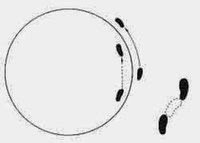
The Function of Circular Walking in Baguazhang
WeiQunjie

To walk in a circle is one of the most important techniques of baguazhang practice. With a good mastery of it, you will improve your baguazhang performance benefits in the following two ways

First of all, the circular movements of the feet may help improve your health and this function is served by the change of direction, the repetition of movements, the coordination of the dynamic and the static and the lowering of qi into the dantian, an area of 5 cm below the navel. In so doing, you can improve your internal and external exercises and moreover make them better coordinated. Specifically, internal exercise is to dredge channels and collateral passages, promote blood circulation and improve the function of internal organs while external exercise, which consists of the techniques executed with the hands, eyes, trunk and feet, is to limber up your muscles and joints and strengthen your physique. To walk in a circle can provide you with an opportunity of adjusting your breath. But there are some points to remember when you do the circular movements with your feet.

They are (1) Clear away all distracting thoughts, concentrate their energy on practice, relax your muscles, lower qi into the dantian, look straight at the center of circle and coordinate your breath and body movement; (2) try to avoid exerting brainless force; (3) make abdominal respiration your main breathing method; (4) keep your breath long and enough and your movements slow and natural. If you practice according to the above-mentioned principles for a long time, you will probably find that your qi and blood flow freely, your internal organs function effectively and your internal organs function and your lower limbs become strong and flexible.

When you have benefited so much from your practice, you will be able to prevent yourself from contracting premature osteoporosis, thus avoiding acquired deformity and chronic diseases in nervous, cardiovascular, respiratory and digestive systems. For those who have trouble in these systems, they will feel better after practicing as required for some time. If you achieve a good combination of the internal and external work and the dynamic and static exercise when you walk round and round, it will not only improve the function of your vestibular organs but also produce a beneficial effect of your central nervous system.

In addition, this walking exercise may also help you improve your skills for attack and defense. Assuming that your opponent is at the center of the circle. You may seek a chance of surprise attack by moving here and there in the eight diagrams. When you go in for an attack, defend yourself with your hands and hit at your opponent with your legs. With moving body, swinging legs and varied footwork and hand positions, you can gain an advantage over your opponent and make him helpless in the face of your attack. In fact, the main function of this exercise for actual combat is to help you make the best of your strong points and strike at his weak points so as to nullify his attack and defense. This requires you to be on the move when you observe the situation, build defense and initiate attack. Through this tactic, you will find it quite easy to achieve victory over your opponent.

(Translated by Jiang Hanzhong)
from Martial Arts of China Vol. 2 No.1


Comments From the Compass Desk
Baguazhang is a good exercise to center oneself.   The proper execution of this exercise usually help the strategist to develop the state of mindfulness.

You can learn more about centering through the practice of internal martial arts by visiting Cook Ding's Kitchen.

Side Note
In some remote areas, there are a few people who claimed that they could connect the principles of Sunzi to the practice of Baguazhang and to the concepts of Yi-jing. 

The problem behind their notion is that they could not describe the technical specifics for assessing the strategic complexity of a situation.and understanding the "corollary after-effect" of each projected choice.

# # #

Saturday, August 16, 2014

The Best Practices of Desktop Strategists: Plan Your Work. Then Work Your Plan


Updated at 11:18 hrs

Plan your work. Then work your plan. Does that sound simple?

How can one plan their work when he or she does not know the basics for building a plan?  Better yet, does he or she know the configuration of the situation in terms of connectivity and consistency?


The Compass Process


Step One: Assess.   
Click here for the basics of assessing 

Step Two: Positioning Strategically by Planning and Preparing
Following is an abridged  listing of questions that the newbie project strategist should ask him or herself?

  • What is the first step for planning a project?
  • When does one establishes the metrics for their goals and objectives?
  • When does one establishes the priorities for their goals and objectives?
  • When does one establish the risk points for their goals and objectives?
Without the knowledge of those basics, the timeline will not be met and the project costs will escalated.  The project strategist would be lucky if half of the project requirements are met.

Some of our associates have suggested to me that the newbie strategist should take a class on strategic project management while reading the "Eight Strategy Classics" (Seven Military Classics of Ancient China + Sun Bin's Military Methods) during their off hours. It is that simple.  ... 

Step Three : Influence the Setting With One's Strategic Position
We will cover this specific topic in a future post.